

Accommodations for Neurodivergent Employees
Explore effective strategies for creating Accommodations for Neurodivergent Employees. Learn how Accommodations for Neurodivergent Employees boost productivity.


May is Mental Health Awareness Month and that is a good reminder that there are a lot of simple things we can do to help support our neurodivergent co-workers, friends, and employees. As the topic of mental health has become a larger part of the mainstream conversation, employers have been seeing a big increase in ADA accommodation requests for employees with cognitive disabilities.
You may be thinking that you don’t know any neurodivergent employees at your workplace, but you probably do;
recent studies suggest that 15 - 20% of the population are part of the neurodivergent community.
So, what can employers proactively do to make their companies more accessible to the employees that experience these types of disabilities?

First let’s break down what it means to be neurodivergent.
According to The Cleveland Clinic neurodivergent people are “people whose brain differences affect how their brain works and cause those people to have different strengths and challenges from people whose brains don’t have those differences.”
You could compare it to the differences between operating systems on your phone. Android OS and Apple’s iOS can perform all the same tasks however they have different strengths, different challenges, and you often have to use a different set of instructions when switching from one to another. They both work, they are both good, but they can be very different.
Attention Deficit Hyperactivity Disorder (ADHD)
Autism Spectrum Disorder (ASD)
Obsessive Compulsive Disorder (OCD)
Post-Traumatic Stress Disorder (PTSD)
There are many others and many variations or combinations of multiple types as well.
People often hear the word “disability” and think about people who experience visibly obvious disabilities such as a person using a mobility device like a wheelchair or a person who is vision-impaired using a white cane, but there are many other disabilities that are hidden. Neurodivergent people often fall into this category.
On top of that many neurodivergent people develop a skill called “masking” where they learn to hide or distract others from their differences to meet traditional social expectations, avoid judgement, or simply to fit in with the group so you often can’t know just by interacting with someone on a professional level. It’s a best practice to approach all people with compassion and empathy since we can’t always know what challenges they may be facing behind their outward appearance.

There is no blanket solution to accommodation but having a better understanding of how some these disabilities might affect people’s experience can give us a starting point for some of these accommodation conversations that could come up. These are some common struggles associated with neurodivergence and why accommodation requests that may seem mundane can be very important.

Many ADHD brains thrive on high levels of stimulation. Tasks that are repetitive or don’t require complex problem solving such as data entry can make focus extremely difficult and sometimes impossible. Being able to listen to music, use a fidget spinner, or even multi-task can bring the level of stimulation up and help maintain focus even though it may seem like a distraction. Long periods of low stimulation can lead to a dopamine crash, at which point they can lose the ability to get anything done at all.
Some PTSD brains can struggle to focus if there is too much stimulation. They can sometimes experience hypervigilance where the brain is unable to tell the difference between necessary input and unnecessary input. Maybe they are trying to focus on their work but the sound of a door opening and closing throughout the day keeps pulling their focus away. Things like noise cancelling headphones or moving their desk to a quiet corner can improve their productivity in a big way.
One of the many presentations of Autism can be people who struggle to do things that feel inefficient or out of order to them. Following a set order of operations might be business as usual to most, but can feel too rigid and stressful to some people on the spectrum. Simply being able to adapt the steps to match the way their brain functions could help them get the same results in a way that works with their thought process instead of against it. Having that flexibility could even lead to innovation that improves the process for everyone.
These examples only touch on some of the many types and symptoms of neurodivergence, but you can see why these accommodations that might not seem like a big deal can make a big difference in productivity!


If an employee self-identifies as being neurodivergent the most important thing you can do is listen and ask questions. Different accommodations will benefit different people so there isn’t a simple template we can follow, but here are a few ideas to start with:
Allow employees to tailor their work environment and workflow to their needs. Things like headphones, fidget spinners, requesting to move desks can make a huge difference in productivity. It’s always worth trying.
Having a place to go to escape the noise or busy atmosphere of a workplace can allow people to reset and re-charge. A quiet place ideally with dim lighting can create a sense of calm. Having a break room with a loud TV on all day can prevent people from being able to truly relax on their break.
Neurodivergent people can often miss traditional social cues or misunderstand idioms or sarcasm. Clear expectations and direct language will ensure that everyone is on the same page.
When someone is struggling with a task or is losing productivity don’t assume the worst. Having an open conversation can reveal the real reason behind the challenges. Give them an opportunity to ask for accommodations before you assume.

If working remote is an option in your industry it can be a game changer for some neurodivergent people. Being able to control their own environment at home can solve a lot of challenges that people with cognitive disabilities face in the workplace. Trial periods are always an option if there are concerns.

Please remember this is not an all-inclusive guide that speaks to all neurodivergent people’s experiences. Everyone is different and the most important factor is communication between you and the employee themselves. Some of these ideas may be practical in your workplace but others may not and that’s ok. When any employee makes any request for accommodation or self identifies their neurodivergence, or any disability for that matter, sit down and have a conversation with them. Understand that being flexible with accommodations can improve morale, boost productivity, and foster loyalty from staff that feel like their needs matter in the workplace.
So this month I challenge you to think about some proactive accommodations you could implement to make your company a better place to work for employees with all types of cognitive experiences.
We proudly celebrate International Human Resources Day, recognizing the incredible transformation HR professionals bring to workplaces worldwide.
Thank you to our amazing team here at Vida HR as well as all HR professionals for your tireless efforts in shaping better workplaces and brighter futures.


Depending on what state you operate in, you may have a few state or federal leave options to provide the employee. In lieu of state or federal resources, you could consider getting an EAP or similar employer benefits.
Mental health is a tough conversation, especially in the world of business. Many employers may want to help struggling employees, but are unsure of what they can do without overstepping. Thankfully, there are some resources the government provides; however it may depend on where you work.
On the federal side, your employee might be covered under the Americans with Disabilities Act (ADA), in which they could go through the interactive process in order to receive accommodations that may help them continue to work.
Alternatively, if your business qualifies under the Family and Medical Leave Act (FMLA), the employee can take unpaid, job-protected leave for the FMLA, for up to 12 work weeks.
However, some employers may have more resources available through the state. In Colorado, as well as a few other states, their mandatory paid sick leave allows employees to use accrued time for dealing with mental health issues. Some states also have Paid Family and Medical Leave (PFML), such as Colorado’s FAMLI program. These policies act similarly to FMLA leave however they may offer partial wage replacement during leave.
If none of these options are viable, an employer can consider providing an Employee Assistance Program (EAP) benefit to their employees. EAPs provide short-term counseling services as well as referrals to help employees navigate mental illness. Since this is an employer provided benefit, employers interested in offering EAPs will need to consider the costs.
An employee’s mental health is something that should be taken seriously. A lot of stigma exists around it, but it’s important to remember that struggling employees can still continue to do good work and thrive, and they can get better. A little bit of grace from their employer can go a long way.


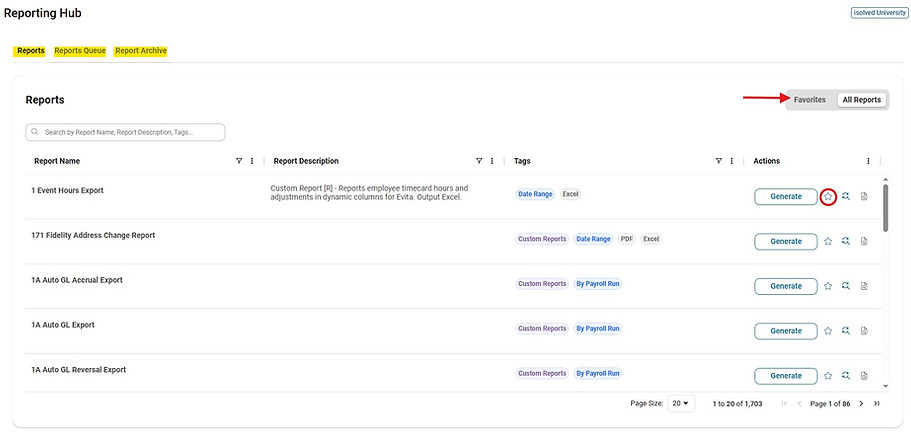
Coming Soon! isolved is rolling out a new menu: Reporting Hub.
Reporting Hub brings reports into one organized, user-friendly destination, making it easier to find what you need, run reports with confidence and manage reporting tasks more efficiently. It is designed to reduce the time spent navigating the system, simplify the reporting process, and improve accuracy through easier validation and customization before reports are generated.
With Reporting Hub, clients can access critical payroll and workforce data faster and with greater confidence. Streamlined downloads, improved search, and enhanced archive visibility also help support stronger operational control, better compliance readiness and smoother day-to-day reporting.


Favorites report options and menu specific to each user
Comprehensive search and tag-based filtering to quickly locate reports
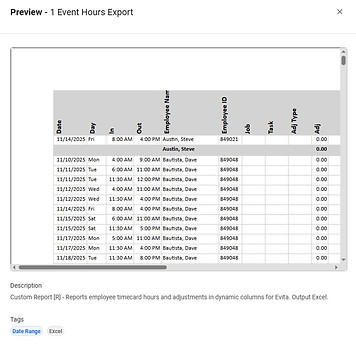
Preview report layouts using sample data before generating
Parameter-driven report customization to meet specific business and compliance needs
Edit and regenerate reports without starting over
Multi-select functionality to download multiple reports at once as a zip file
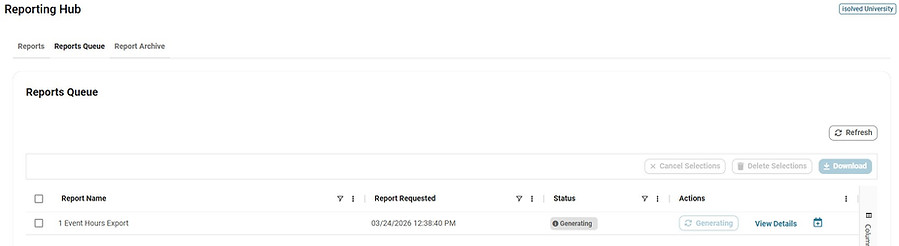
Centralized Reports Queue to manage generated reports
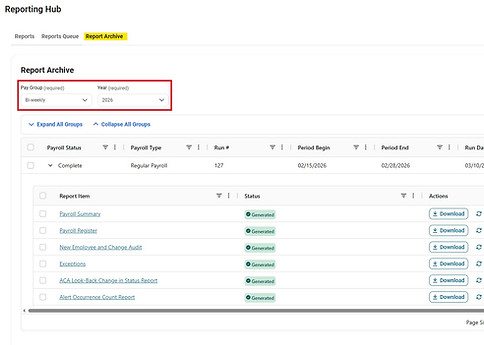
Enhanced payroll report archives with visibility into payroll runs and report details
Reporting Hub is scheduled to be available to all Vida HR isolved Client Users effective May 1, 2026.
The Reporting Hub will not be replacing the existing Client Reports, Report Writer, or My Reports Queue menu items at this time. Future enhancements are expected to incorporate Report Writer reports into the Reporting Hub and eventually phase out certain reporting menu items.