


What should I do if a manager is dating an employee? - HR Insights
Get an HR Expert's answer on how to handle workplace dilemmas with our guide on "What should I do if a manager is dating an employee?" Learn effective policies today.


isolved has now added electronic signatures (e-sign) capabilities for fillable forms!
Previously, the options were to have a document Acknowledged – meaning a signature could be gathered on a document in isolved, or, you could have an employee fill out a form without a signature option.
With this new release, users can now enable electronic signatures (e-sign) for fillable forms and wage notices, allowing employees to sign documents digitally with just a few clicks. This eliminates the need for printing, scanning and manual signature collection.

Fillable Forms:
Configure Your Own E-Signature Fields
Enable e-signature in document settings.
Map signature and date fields – select which parsed fields are used for signatures and dates.
The PDF form must have fillable fields to assign the E-Sign and Date Fields.
Save your configuration – The form is now ready for employee signatures.


When employees complete the form, they’ll be prompted to sign using one of two methods:
Type-to-sign – Type their full name in a signature font
Draw signature – Draw their signature with their mouse or touchscreen
Wage Notices: Simple Enablement
For wage notices, signature field mapping is handled by isolved, and no configuration is required. Simply enable e-signature for the wage notice you want to use, and employees will be able to sign digitally when they receive it. The signature and date are automatically placed in the correct fields.


Having a policy in place to limit conflicts of interest is key. The company should be empowered to prevent conflicts of interests through transfer or even termination, especially in cases where the relationship is between a manager and employee.
Manager and employee, kissing in a tree, while an interesting twist on the rhyme, sounds like more of a nightmare in the world of business. There’s a lot of reasons why you don’t want a manager dating their employee – conflict of interest, preferential treatment, the fall out between employees if the relationship ends, etc. But how do you mitigate those risks?
It’s important to have a policy in place for workplace relationships, even those that don’t involve a manager and subordinate. Relationships can cause tensions in the workplace if not properly handled, and it can create other issues that a company has to deal with. That’s not to say a company has to ban relationships all together, they can work, as long as the company has a policy in place to deal with those issues.
Any policy on workplace relationships needs to account for conflicts of interest. Do two employees being in a relationship present conflict that would prevent them from doing their job? Could it result in preferential treatment that would cause inequity amongst other employees? This is why many workplace relationship policies require disclosure of workplace relationships – so that the company can investigate if there is any chance for a conflict of interest. Especially in manager-employee relationships, the company may even need to change or even terminate an employee’s position to avoid a conflict of interest. A policy setting this expectation can help discourage manager-employee relationships, or at least shield the company from some liability if a transfer or termination is necessary.
Now, some employers may prefer to simply prohibit relationships all together, in the attempt to keep things simple. While that certainly is true, it does come with risks of its own. It may cause employees to date in secret, which leaves the company with all the same problems, but no way to mitigate them in advance. In addition, there are occasionally laws that might prevent this approach: for example, in San Francisco, an employer cannot create a policy that prevents workplace relationships, except for those that have a conflict of interest.
Relationships in the workplace don’t always spell disaster. As long as a company stays on top of any potential conflicts of interest, love can stay in the air, and the employees can keep sitting in that tree, as long as it isn’t on company property.

If you lead a small or mid-sized business, you see it every day. Well-intended employees who, while engaging in dialogue, are having two very different conversations. Minor misunderstandings that escalate. Tension that is not about effort or values, but about how people think, communicate, and work.
National data confirms what many leaders already feel. Workplace incivility is rising. According to the Society for Human Resource Management Civility Index, U.S. workers experience or witness multiple acts of incivility each week. For smaller organizations, the impact is more immediate and more personal because every interaction matters.

One of the most common and overlooked drivers of this tension is personality difference. When leaders learn how to turn those differences into strengths, teams become more resilient, collaborative, and effective.
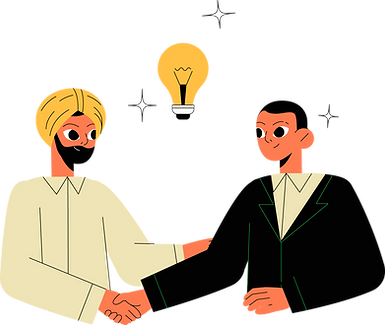
In large organizations, personality clashes can hide in silos. In small teams, they are impossible to ignore.
Small and mid-sized businesses often hire quickly, reward versatility, and rely on people who can “just make things work.” Over time, that can unintentionally create teams full of similar thinkers. The same communication styles. The same problem-solving approaches. The same blind spots. It feels efficient but it is also limiting.
When everyone approaches work the same way, innovation slows, accountability weakens, and frustration quietly builds. What looks like a performance issue is often a personality imbalance.
Most leaders naturally gravitate toward people who think like them. This instinct, known as affinity bias, is human. It is comfortable to work with those who share your pace, priorities, or communication style.
In small businesses, this bias shows up quickly. It influences who gets heard, whose ideas move forward, and who is perceived as “difficult.” Over time, sameness becomes the norm, and difference feels disruptive rather than valuable.
The result is not stronger teams. It is fragile ones.
One useful way to think about personality balance is through four common working styles. Most people are a blend, but nearly everyone has a dominant lean.
Data-driven, detail-oriented, cautious. They ask, “Does this actually work?”
Execution-focused, organized, decisive. They ask, “What is the plan and when do we start?”
Empathetic, communicative, emotionally aware. They ask, “How will this affect people?”
Big-picture thinkers, idea generators, experimenters. They ask, “What if we tried something different?”
None of these styles is better than the others. Problems arise when one dominates unchecked or when one is missing entirely.

Leadership consultant Stephen Shapiro often shares a story from early in his career that illustrates this point.
He once led an innovation initiative alongside a colleague who shared his creative, people-focused style. Ideas flowed freely. Energy was high. Meetings were engaging. The problem was execution. Without strong analytical grounding or disciplined follow-through, the initiative stalled and ultimately failed.
Most small businesses are not managing multi-million-dollar programs, but the same imbalance shows up in familiar ways. Projects stall. Decisions linger. Teams burn energy without seeing results.
When Shapiro later partnered with someone who brought structure, planning, and accountability, the dynamic changed. The contrast initially felt uncomfortable. Over time, it became the foundation for trust, progress, and lasting results.
The lesson was simple. Collaboration works best when different strengths are intentionally paired.
Inclusive leadership does not mean lowering standards or avoiding disagreement. It means recognizing that different working styles protect the organization in different ways.
Hiring for complement, not comfort
Giving equal weight to ideas delivered in different styles
Valuing the person who slows you down as much as the one who speeds you up
Creating space for respectful disagreement without penalty
You do not need to become every personality type. You need to understand which perspectives are missing and which ones you may unintentionally discount.


Think about the colleague you struggle with most.
The one who wants more data when you want action.
The one who pushes back when you want alignment.
The one who focuses on people when you want results.
On small teams especially, strength does not come from sameness. It comes from learning how to work with difference instead of around it.
When leaders intentionally value contrasting styles, teams make better decisions, navigate conflict more productively, and build cultures where people feel respected rather than managed.
Turning personality differences into team strength is not about fixing people. It is about recognizing that the right mix of perspectives is what allows organizations, especially small ones, to grow, adapt, and endure.


I was raised in La Quinta, California, a desert resort city in the Coachella Valley, nestled between Indian Wells and Indio and surrounded on three sides by the Santa Rosa Mountains. Known as the "Gem of the Desert," it's celebrated for its world-class golf courses, luxurious resorts like the historic La Quinta Resort & Club (established in 1926 and a longtime hideaway for Hollywood celebrities), charming Old Town with boutique shops, outdoor dining, and a vibrant arts scene, plus endless opportunities for hiking, biking, and outdoor adventures in the nearby mountains.
While I appreciate the sunny, laid-back desert vibe, I personally prefer four seasons and the variety they bring.
After growing up there, I joined the United States Marine Corps and was quickly relocated to North Carolina for the duration of my enlistment as a Combat Cameraman. On top of my normal duties capturing still and motion imagery in various environments, I oversaw roughly 30 Marines in my section, which gave me my first real introduction to HR and administrative responsibilities. I found my footing in HR and admin work by advocating for my junior Marines and navigating the VA system for myself after deciding it was time to move on from active duty.
From North Carolina, I moved to Ohio and attended Kent State University, where I pursued my business degree. In 2018, I had the opportunity to relocate to Colorado and live with long-time friends. There, I completed my BA in Business at Regis University (2020) and launched my HR career in the private sector. Over the last 10 or so years, from the Marines to various private companies, I've supported organizations in DOD-related fields, manufacturing, start-ups, venture capital, construction, engineering, and hospitality.
In The Predictive Index, my results point to the Operator reference profile. It's described as a patient, conscientious, relaxed, and cooperative team player who's reliable, steady, and thrives in stable environments with clear processes. I tend to work methodically, focus on details, support others thoughtfully, and prioritize harmony and high-quality, consistent results.
A little about me: At home, life is lively and full, with my daughter Ellie (3), son Beckett (1.5), my wife Breana, and our farm animals, including chickens, horses, dogs, and cats, that keep us busy every day. We share a love for travel and exploring new places whenever we can find the time! Personally, I have a passion for artwork, cars, and I've recently begun hunting.
This blend of military discipline, diverse professional experiences, and a grounded family life keeps me steady, supportive, and always ready to contribute thoughtfully to whatever comes next!


